Does an Automatic Shirt Ironer Really Work? An Honest Look
18 October 2026 · 6 min read
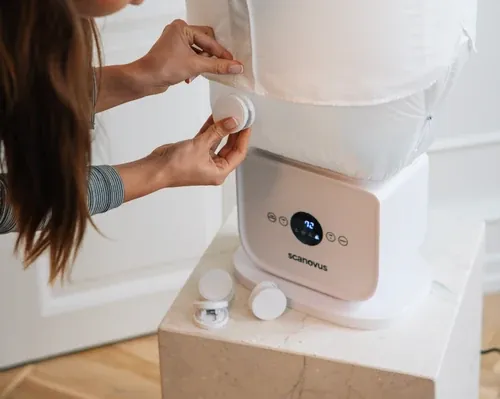
The first time most people see an automatic shirt ironer, the reaction is the same: that cannot possibly work. A shirt goes on wet and creased and comes off dry and smooth, without anyone touching an iron. One of our customers wrote that they "thought it was too good to be true" before trying it.
So does it actually work? Here is an honest look at how these machines work, what results to expect, and the limits that are worth knowing about.
How an automatic shirt ironer works
The idea is simple. Wet cotton is soft and flexible, and as it dries it sets in whatever shape it is in. An automatic shirt ironer uses that to its advantage:
- You put a damp shirt onto an inflatable form shaped like a torso.
- Clips hold the front, the back and the sides, so the fabric is pulled taut.
- Warm air inflates the shirt from the inside, gently stretching it smooth.
- As the shirt dries in that stretched shape, the wrinkles disappear.
On the Scanovus Automatic Ironing Machine 4.0 this takes around 8 to 12 minutes for a shirt. You choose the time and temperature on the touch panel, using lower heat for delicate fabrics and higher heat for everyday cotton.
What results can you expect?
When it is used properly, the result is a dry, smooth, wrinkle-free shirt that is ready to wear. Customers describe it in very practical terms:
"It does (excuse the phrase) exactly what it says on the tin. Its simple and easy to use. No effort involved perfectly ironed shirts, T shirts and Pullovers every time."
It is worth being clear about what it is not. It does not press a sharp crease the way a hand iron can, and it is not the same as a professionally pressed shirt. As one honest reviewer put it: "It's not a human ironing but it saves your time." For an everyday work shirt, most people find that smooth and wrinkle-free is exactly what they need.
The limits nobody tells you about
- Dry shirts need moisture first. It works on damp fabric. For a shirt that has already dried, mist it with the included atomizer before you start.
- Fit matters. If the form is too small for the shirt, small wrinkles can remain. The fix is easy: open the side zippers to make the form larger. One customer noticed occasional small wrinkles "but after opening the zippers that allowed it to expand they quickly went away."
- Details need a moment of attention. Fold the collar up and avoid trapped creases when you put the shirt on, and the finish will be even.
Tips for the best finish
- Use shirts straight from the washing machine, while they are still wet.
- Adjust the zippers and telescopic rods so the shirt fits snugly.
- Clip the sides, front and back to stretch the fabric.
- Choose the right temperature for the fabric.
- Hang the shirt on a good hanger as soon as it is done.
See how it works, with 30 days to try it at home.
See the Automatic Ironing MachineSo, does it really work?
Yes, with the right expectations. It will not replace a professional press for a sharp crease, but for the weekly pile of work shirts, polos and t-shirts, it removes the ironing almost entirely, and it does it while you get on with something else. If you are weighing it against other options, see our comparison with steam irons and steamers.